If you step onto a busy factory floor today, you will see a flurry of activity. Forklifts hum in the distance, machines clatter with rhythmic precision, and teams of people move with purpose. At the heart of this organized chaos is a specific role that keeps the entire gears of industry turning. When we look closely at Production Helper Job Duties, we see much more than just manual labor. These individuals are the essential glue holding the manufacturing process together. Whether you are looking to start a new career or simply want to understand how things get made, this guide breaks down everything you need to know about this vital position for the 2024 and 2025 job market.
Understanding the Core of Production Helper Job Duties
The role of a production helper is often the first step for many entering the industrial world. It falls under the category of entry-level factory jobs, but the simplicity of the title belies the importance of the work. You are essentially the right hand of the machine operators and supervisors. Your day starts early, often before the sun comes up, as you prepare the workspace for the shift ahead.
One of the primary Production Helper Job Duties involves setting up equipment. This is not just about flipping a switch. It requires a keen eye for detail to ensure that every component is in its right place. If a machine is not fed the right raw materials at the right time, the whole line stops. That is where you come in. You ensure the flow of production is never interrupted.
Daily General Labor Responsibilities
While the specific tasks can vary depending on whether you are working in a food processing plant or an automotive assembly line, certain general labor responsibilities remain constant across the board. You are expected to be physically active throughout your shift. This is not a desk job. You will be standing, walking, lifting, and bending for several hours at a time.
A typical list of daily tasks includes:
- Loading raw materials into production machinery.
- Removing finished products from the line and checking for obvious defects.
- Packing goods into crates or boxes for shipment.
- Assisting senior technicians with complex equipment adjustments.
- Reporting any mechanical sounds that seem out of the ordinary.
By performing these Production Helper Job Duties, you allow the more experienced technicians to focus on the technical settings of the machinery. You are the second set of eyes and hands that prevents small issues from becoming massive, expensive shutdowns.
Manufacturing Assistant Tasks
As you gain experience, your role might evolve into more specialized manufacturing assistant tasks. This means you are no longer just moving boxes; you are helping with the actual assembly or processing of the goods. For instance, in a wood shop, you might be responsible for sanding down edges after a machine has cut the basic shape. In a chemical plant, you might be tasked with monitoring gauges and recording data every hour.
| Task Category | Description | Frequency |
|---|---|---|
| Feeding Machines | Placing raw items onto belts or into hoppers | Constant |
| Quality Checks | Spotting dents, scratches, or missing parts | Every 30 minutes |
| Tool Prep | Gathering the specific wrenches or dies for a changeover | As needed |
| Palletizing | Stacking boxes onto pallets in a stable pattern | End of shift |
Industrial Cleaning Procedures
A clean factory is a safe factory. This leads us to one of the most underrated Production Helper Job Duties: following strict industrial cleaning procedures. This is not just about sweeping floors, though that is part of it. It involves the deep cleaning of machinery to prevent the buildup of dust, grease, or debris that could cause a fire or a mechanical failure.
In food-grade environments, this becomes even more critical. You might be responsible for sanitizing belts and vats using specific chemicals and hot water. Understanding how to handle these cleaning agents safely is a huge part of the job. It requires discipline and a commitment to hygiene standards that protect the end consumer.
Material Handling Basics
Moving things from point A to point B sounds simple, but in a massive warehouse, it is a science. Material handling basics involve knowing how to use pallet jacks, hand trucks, and sometimes small motorized tugs. You have to understand weight distribution. If you stack a pallet poorly, it could tip over, causing injury or property damage.
Within the scope of Production Helper Job Duties, you are often the person responsible for organizing the “work in progress” area. This means keeping track of which items are ready for the next stage of production and which ones are waiting for inspection. It requires a bit of spatial reasoning and a lot of organizational skill.
Warehouse Maintenance and Occupational Health and Safety
Every worker has the right to go home in the same condition they arrived. This is why occupational health and safety is the most important part of any industrial job. As a helper, you are often the first person to spot a hazard. Maybe there is a small oil leak on the floor, or perhaps a safety guard on a machine has come loose. Reporting these issues immediately is one of the key Production Helper Job Duties.
Warehouse maintenance also falls under your umbrella. This includes keeping aisles clear of clutter, ensuring that fire extinguishers are accessible, and making sure that all emergency exits are unblocked. When the workplace is tidy, everyone can move faster and more safely.
Safety Equipment and Protocols
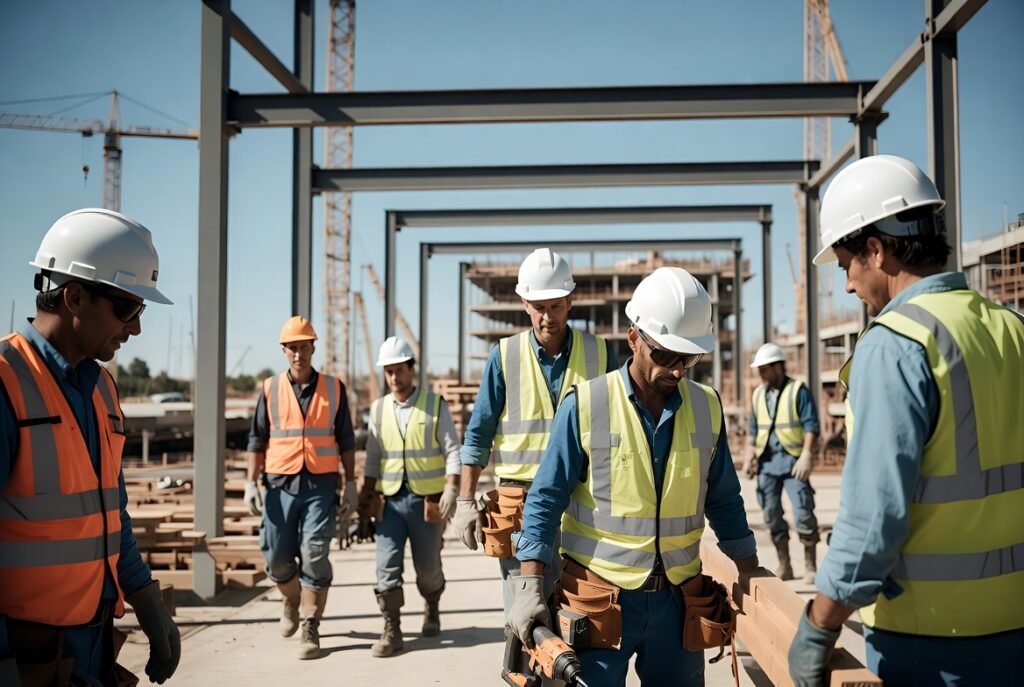
You will likely be required to wear Personal Protective Equipment (PPE) every single day. This usually includes:
- Steel-toed boots to protect your feet from heavy falling objects.
- High-visibility vests so forklift drivers can see you clearly.
- Earplugs or earmuffs to guard against the constant roar of engines.
- Safety glasses to protect your eyes from flying sparks or debris.
- Gloves to prevent cuts when handling raw metal or sharp plastic.
Production Support Roles: The Skills You Need
What makes someone good at these Production Helper Job Duties? It is a mix of physical stamina and mental alertness. While entry-level factory jobs do not always require a college degree, they do require a strong work ethic. You need to be the kind of person who shows up on time every day, ready to work hard.
Communication is also vital. You have to be able to follow verbal instructions in a loud environment. Sometimes, you will need to use hand signals to communicate with a crane operator or a driver. Being a team player is non-negotiable. In production support roles, if one person slacks off, the whole team feels the weight.
| Essential Skill | Why It Matters |
|---|---|
| Physical Endurance | You may be on your feet for 8 to 12 hours. |
| Situational Awareness | Being aware of moving parts and vehicles around you. |
| Basic Math | Counting inventory and measuring raw materials. |
| Hand-Eye Coordination | Using tools and assembling small parts quickly. |
Career Path Tips for 2024 and 2025
If you are starting as a helper now, where can you go in the next two years? The beauty of the manufacturing world is that it rewards those who are willing to learn. Most plant managers started exactly where you are. To move up, you should focus on learning how the machines actually work, not just how to feed them.
Ask questions. If a technician is repairing a machine, ask them what went wrong. Show interest in the computer systems that run the assembly line. In 2025, automation will be even more prevalent. Workers who understand how to interact with robots and automated guided vehicles (AGVs) will be in high demand.
Many companies offer “cross-training.” Take every opportunity to learn a new skill, even if it is not part of your current Production Helper Job Duties. Learn how to drive a forklift. Get certified in basic first aid. These small steps make you indispensable to your employer.
Common Challenges on the Job
Let’s be honest: this job can be tough. It is often hot in the summer and cold in the winter inside a large warehouse. The work can be repetitive, which leads to boredom if you are not careful. However, many people find a deep sense of satisfaction in seeing a finished product roll off the line, knowing they helped build it.
To succeed, you need to manage your energy. Eat well, stay hydrated, and wear comfortable, high-quality socks and boots. Taking care of your body is just as much a part of the job as the work itself.
Frequently Asked Questions
What are the most common Production Helper Job Duties? The most common tasks include feeding raw materials into machines, cleaning the work area, packing finished goods, and assisting machine operators with basic maintenance.
Do I need previous experience for entry-level factory jobs? Usually, no. Most companies provide on-the-job training. However, having a background in manual labor or a steady work history is a big plus during the hiring process.
How much do production helpers typically earn in 2024? Wages vary by location and industry, but most roles offer a competitive hourly rate with opportunities for overtime pay. Many also include benefits like health insurance and retirement plans.
Is there room for growth in production support roles? Absolutely. Many helpers move into roles like Machine Operator, Quality Control Inspector, or Shift Supervisor within a few years of consistent performance.
What is the most important safety rule? Always follow the Lockout/Tagout (LOTO) procedures and never bypass a safety sensor on a machine. Your safety is more important than the production speed.
Final Thoughts on the Role
As we look toward the future of manufacturing in 2025, the demand for reliable people to handle Production Helper Job Duties remains high. While technology changes, the need for human oversight and manual support does not go away. It just evolves. By mastering material handling basics and committing to occupational health and safety, you set yourself up for a stable and rewarding career path.
This role provides a unique vantage point of the entire industrial process. It teaches you discipline, teamwork, and the value of a hard day’s work. Whether this is a temporary stepping stone or the start of a lifelong journey in manufacturing, the skills you pick up here will serve you well in any industry you choose to enter.
Production Helper Job Duties, general labor responsibilities, manufacturing assistant tasks, industrial cleaning procedures, material handling basics, entry-level factory jobs, warehouse maintenance, occupational health and safety, production support roles.